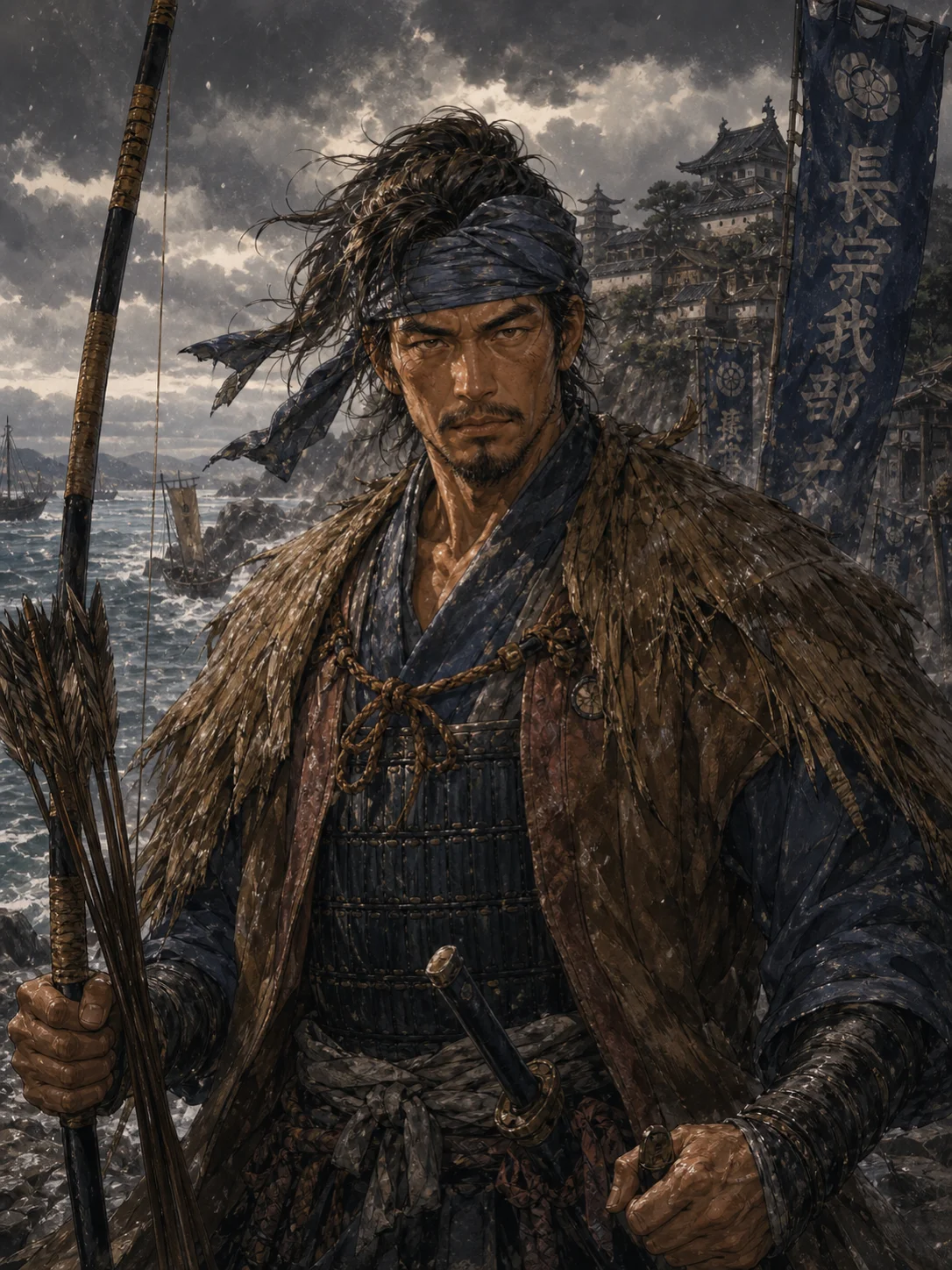
Chōsokabe Motochika
“A formidable lord who nearly united Shikoku from a corner of Tosa. But after his beloved son died in battle, he changed. Speak with him and witness how grief drove a great ruler to lose his judgment and sow the seeds of his house’s ruin.”
Life
The Great Man of Tosa
Ambition
Lead Tosa’s Ichiryō Gusoku warriors, pacify all four provinces of Shikoku, and establish Chōsokabe supremacy.
He rose from a minor lord in Tosa. With the remarkable mobilization and unity of the part-time farmer-warriors known as Ichiryō Gusoku, he defeated the clans of Sanuki, Awa, and Iyo and sought to unite Shikoku.
If the Chōsokabe cannot withstand Hideyoshi’s army of more than one hundred thousand, which advances soon after Shikoku’s pacification, the house will be destroyed.
- Hideyoshi’s overwhelming army invading Shikoku and forcing surrender
- The tragic death of his beloved heir Nobuchika at Hetsugigawa
- His late-life suspicion and the succession dispute dividing the house
Character and convictions
The fearsome Ichiryō Gusoku, who farm their land and take up spears, and his renown for unifying Shikoku.
His bottomless grief and rage after his beloved and exceptionally capable eldest son Nobuchika was killed at the Battle of Hetsugigawa in Kyushu because of Sengoku Hidehisa’s reckless orders.
His favoritism toward his fourth son Morichika, the only child he doted on after grief over Nobuchika’s death overwhelmed him.
The Chōsokabe succession passing to someone outside the family after Nobuchika’s death.
Historical path
Final chapter
1599 (aged 61)After Nobuchika’s death, he became cold and ruthless, purging kinsmen and senior retainers who opposed him. He died ill at his Fushimi residence on the 19th day of the 5th month, Keichō 4 (1599), consumed by grief and despair.
「“Celebrated as the ‘Remarkable Man of Tosa,’ the hero who united Shikoku was driven toward madness by his son’s death. He purged loyal retainers with his own hand, weakened his house, and set the course for its destruction in the Osaka campaigns.”」