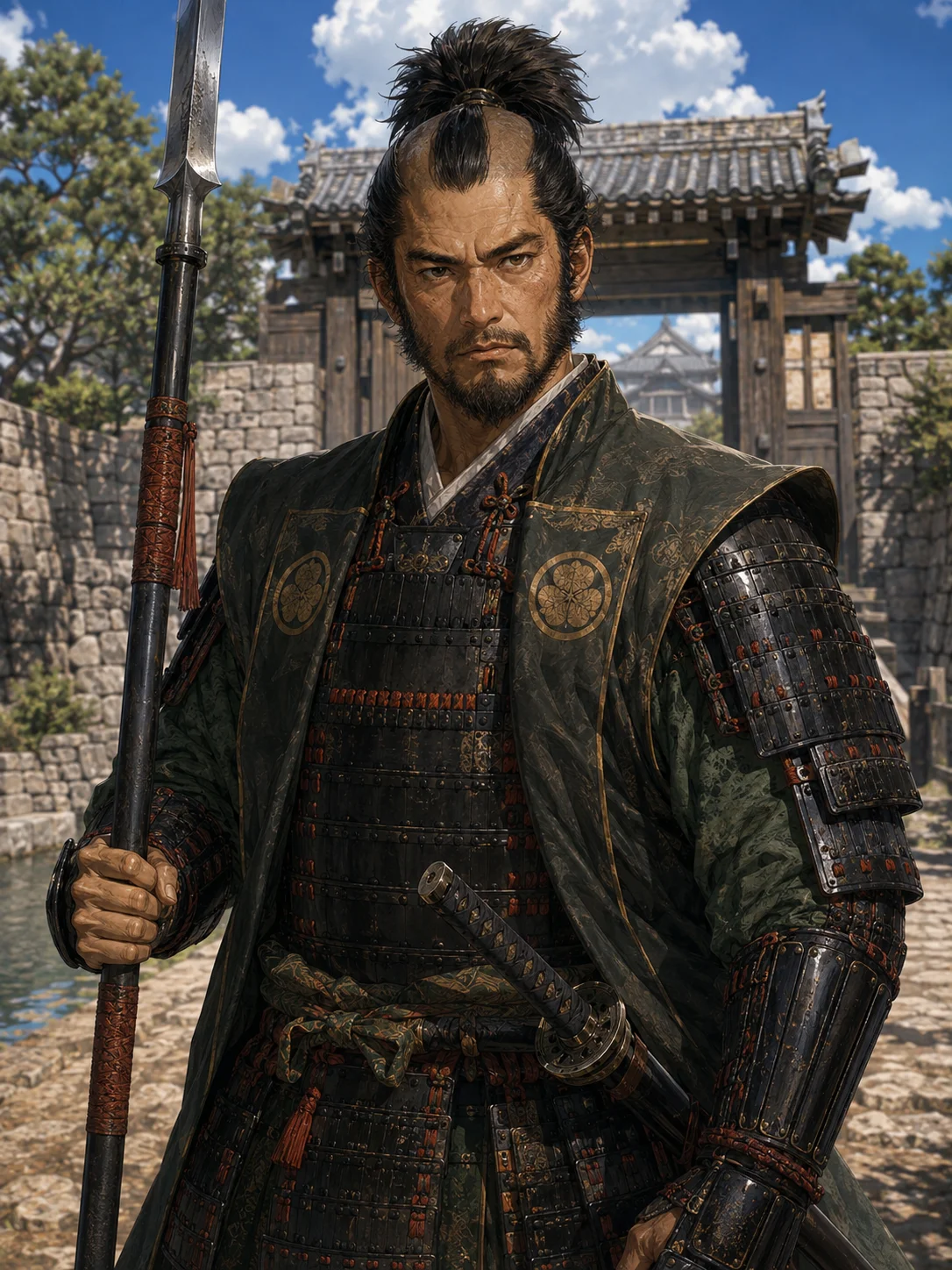
Sakakibara Yasumasa
Ieyasu granted him one character of his name, and Yasumasa was called Tadakatsu’s equal among the warriors of Mikawa. His letter at Komaki and Nagakute put a price on his head. Risk your life in battle, compose a fierce letter, and share his isolation when he is pushed aside late in life, and he will treat you as family.
Life
One of the Four Heavenly Kings of Tokugawa
Ambition
Command the Tokugawa with exceptional strategy and courage, and overcome every obstacle to unification.
Chosen from among the pages, he has supported Ieyasu in battle and governance. If Tadakatsu is the brilliance of arms, Yasumasa will be the pillar of wisdom and courage that raises Ieyasu to rule the realm.
If he cannot defeat Hideyoshi at Komaki and Nagakute, the Tokugawa may be swallowed by the central regime.
- Hideyoshi’s overwhelming wealth and immense army
- Responsibility for Hidetada’s late arrival at Sekigahara
- Warrior retainers losing influence as Honda Masanobu’s bureaucratic faction rises
Character and convictions
The fierce prose of his letter denouncing Hideyoshi and the confidence to put a price on Hideyoshi’s head.
His lifelong failure to prevent Hidetada’s late arrival while serving as military supervisor at Sekigahara.
His deep friendship with rival Honda Tadakatsu, born the same year and one of Ieyasu’s two right-hand men.
Flattering his lord and abandoning a warrior’s backbone to advance his career.
Historical path
Final chapter
the 14th day of the 5th month, Keichō 11 (1606), aged 59After Sekigahara, he oversaw construction at Tatebayashi Castle and flood control on the Tone River. He died of illness at the castle on the 14th day of the 5th month, Keichō 11 (1606), aged fifty-nine.
The warrior who once hurled a letter at Hideyoshi daring him to take his head withdrew from political struggles in peacetime and spent his final years on muddy embankments, then died quietly.