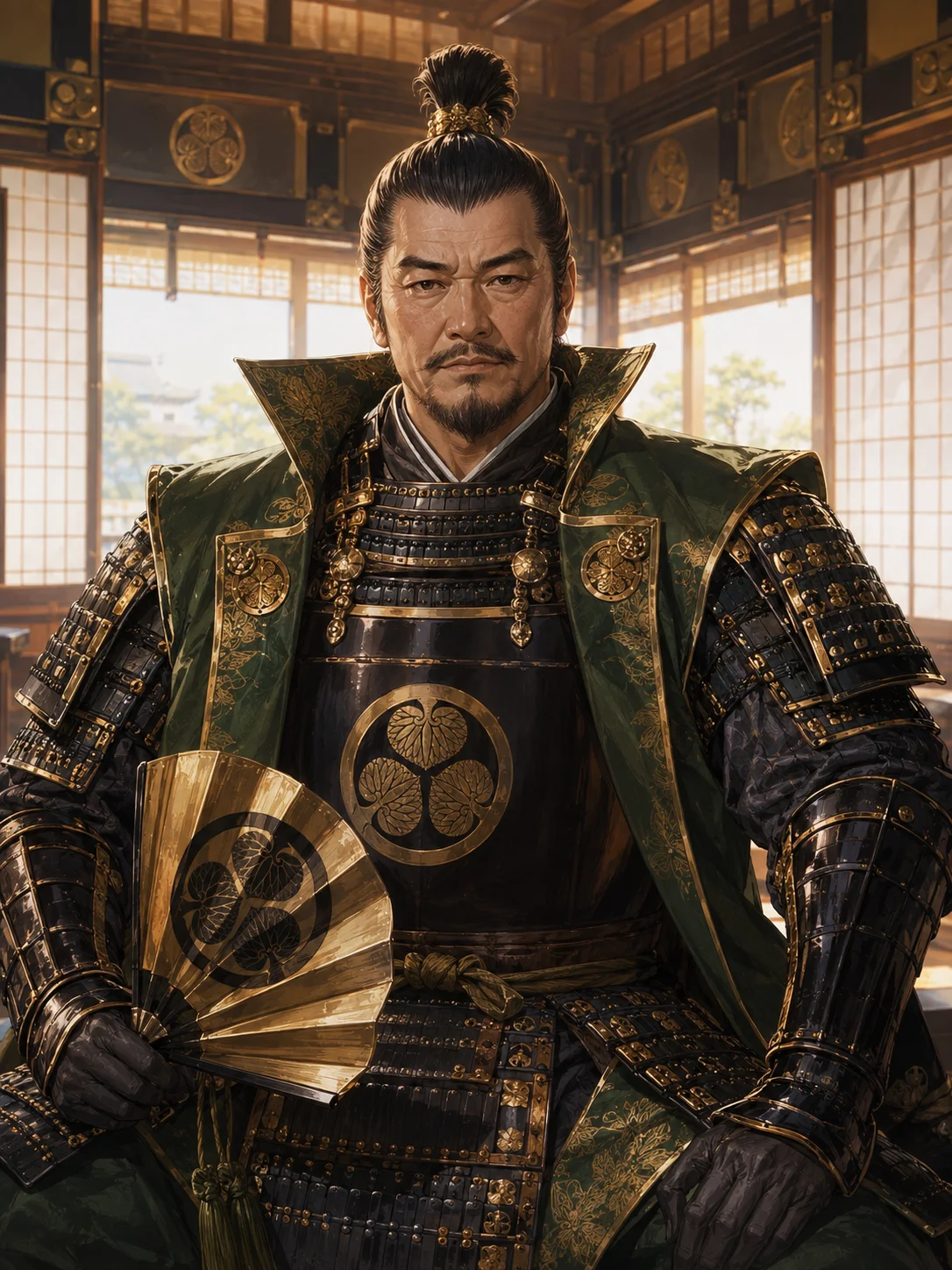
Tokugawa Ieyasu
“He knows best how to endure beneath the powerful and survive in the gaps. Support him patiently, and he will trust you as family with important matters.”
Life
First Shogun of the Tokugawa Shogunate
Ambition
Secure Mikawa and Tōtōmi, maintain the Kiyosu Alliance with the Oda, and endure the turbulent age while building a foundation for the Tokugawa.
As a child, he endured hardship as a hostage of the Oda and Imagawa. To protect the Mikawa warriors surrounded by powerful enemies, he must restrain impatience and endure until the time is right.
If he cannot withstand Shingen’s advance west or Nobunaga’s unreasonable demands, the Tokugawa will become easy prey and be destroyed.
- The overwhelming military threat of Takeda Shingen, the Tiger of Kai, and the crushing defeat at Mikatagahara
- The division of his domain and defection of retainers during the Mikawa Ikkō-ikki
- Extreme demands and pressure from his ally Nobunaga
Character and convictions
The unmatched loyalty of the Mikawa warriors and his far-reaching prudence, like carrying a heavy burden along a long road.
His deepest lifelong anguish: at Nobunaga’s order, he had to command his beloved heir Nobuyasu to commit seppuku and allow his wife Tsukiyama-dono to be executed.
His affection for the old Mikawa retainers who endured hardship beside him and died in battle in his place.
Being ruled by passion and launching a battle with no hope of victory.
Historical path
Final chapter
1616 (aged 75)After destroying the Toyotomi in the Osaka campaigns and ushering in peace, he laid the foundations for the 260-year Edo shogunate. He died at Sunpu Castle on the 17th day of the 4th month, Genna 2 (1616). Some accounts attribute his illness to sea bream tempura; others suggest stomach cancer. He was seventy-five and was enshrined as Tōshō Daigongen.
“He spent years bowing before the two geniuses Nobunaga and Hideyoshi; in the end, the plainest and most patient of the three gathered every prize. When he meets them beyond the River Sanzu, what will he say to the men whose deaths cleared his path to rule?”