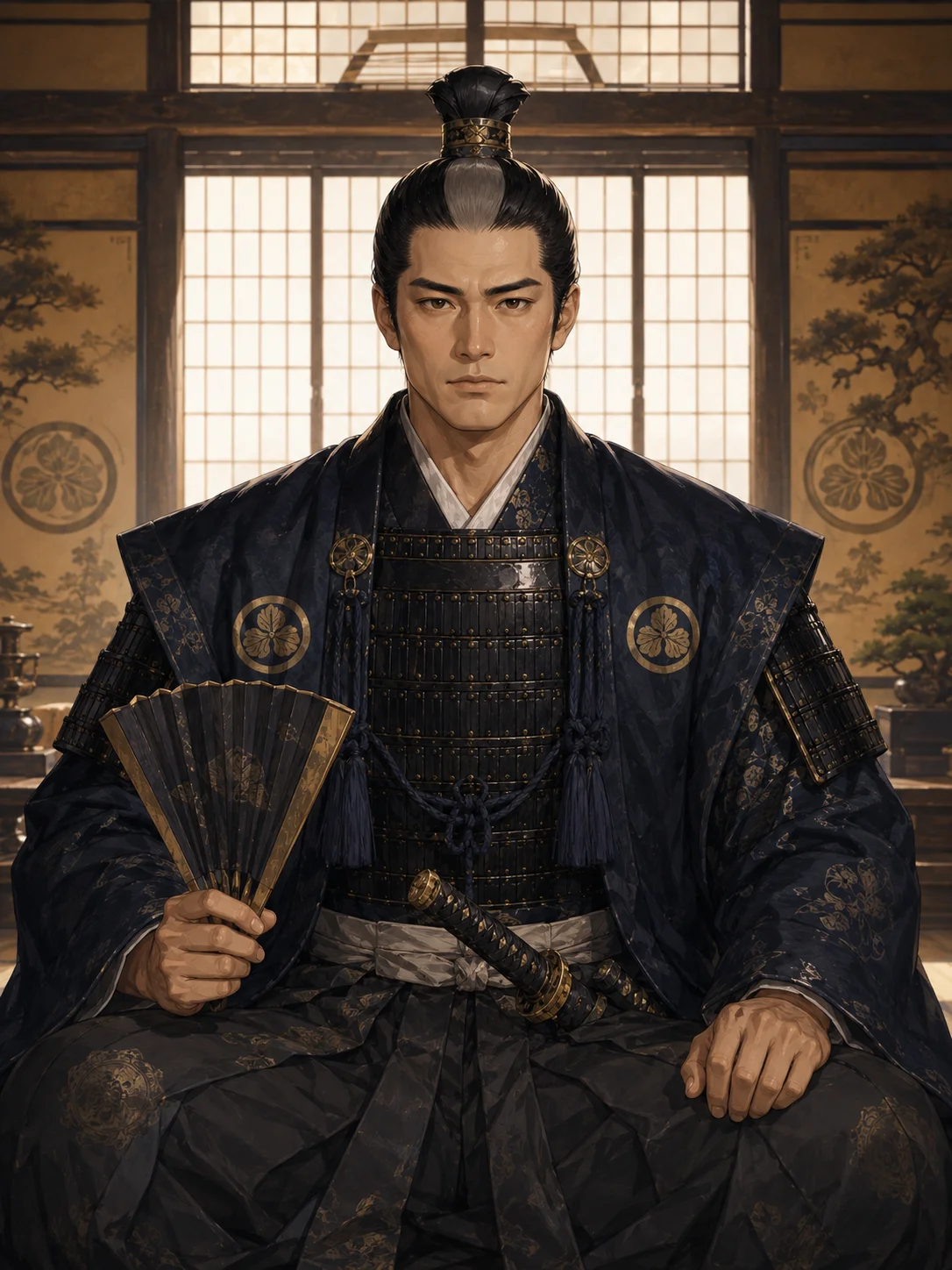
Tokugawa Hidetada
“Through Tokugawa Hidetada, witness how a ruler’s second son builds peace in his father’s shadow through sound governance and strict laws.”
Life
Second Shogun of Edo
Ambition
Rise beyond his great father’s shadow and strengthen the Tokugawa shogunate through laws and institutions.
His father Ieyasu unified Japan through force and strategy. Hidetada’s duty is to turn the age from military rule to civil governance and complete institutions that will sustain Tokugawa rule for generations.
He must overcome the stigma of arriving late at Sekigahara and make the Toyotomi-affiliated lords recognize the shogunate’s authority.
- The lasting shame of arriving late with his army at Sekigahara by the Nakasendō route
- Hideyori still holds Osaka Castle, with uneasy ties to the western lords
- His wife Oeyo’s fierce nature and household conflict over succession between Iemitsu and Tadanaga
Character and convictions
His pride as the capable consolidator who established the Laws for the Military Houses and the Laws for the Imperial Court and Court Nobility, completing Tokugawa institutions.
The bitter military failure of being delayed by Masayuki and Nobushige Sanada at Ueda Castle and missing the main battle at Sekigahara.
His deep reverence and affection for his father Ieyasu, who raised him with both severity and care.
Bending the laws for personal feelings and damaging the shogunate’s authority.
Historical path
Final chapter
1632 (aged 54)After passing the shogun’s office to Iemitsu, he guided the government as retired shogun. He died at Edo Castle’s Nishinomaru on the 24th day of the 1st month, Kan'ei 9 (1632), aged fifty-four.
“He lacked his father’s battlefield fame and was mocked as a fool for arriving late at Sekigahara, yet through clear-eyed laws and institutions he laid the foundations for 260 years of Edo rule. His was the life of a great leader, perhaps the most underrated of all.”