Sengoku UkiyoSengoku Ukiyo
Language
Download for Free
← Back to the character index Mikawa Tokugawa
Tokugawa Hidetada Sakakibara Yasumasa
Honda Tadakatsu
Peerless Under Heaven

Honda Tadakatsu

Mikawa Tokugawa
Honda Tadakatsu
Life 1548–1610 (aged 63)
Title Peerless Under Heaven
Faction Mikawa Tokugawa
Places associated with this character Mikawa (1560–1589), Edo (1590–1600), Ise (1601–1610)
Voice and speech Terse and firm in a Mikawa dialect, his eyes blaze when he recalls his first battle.
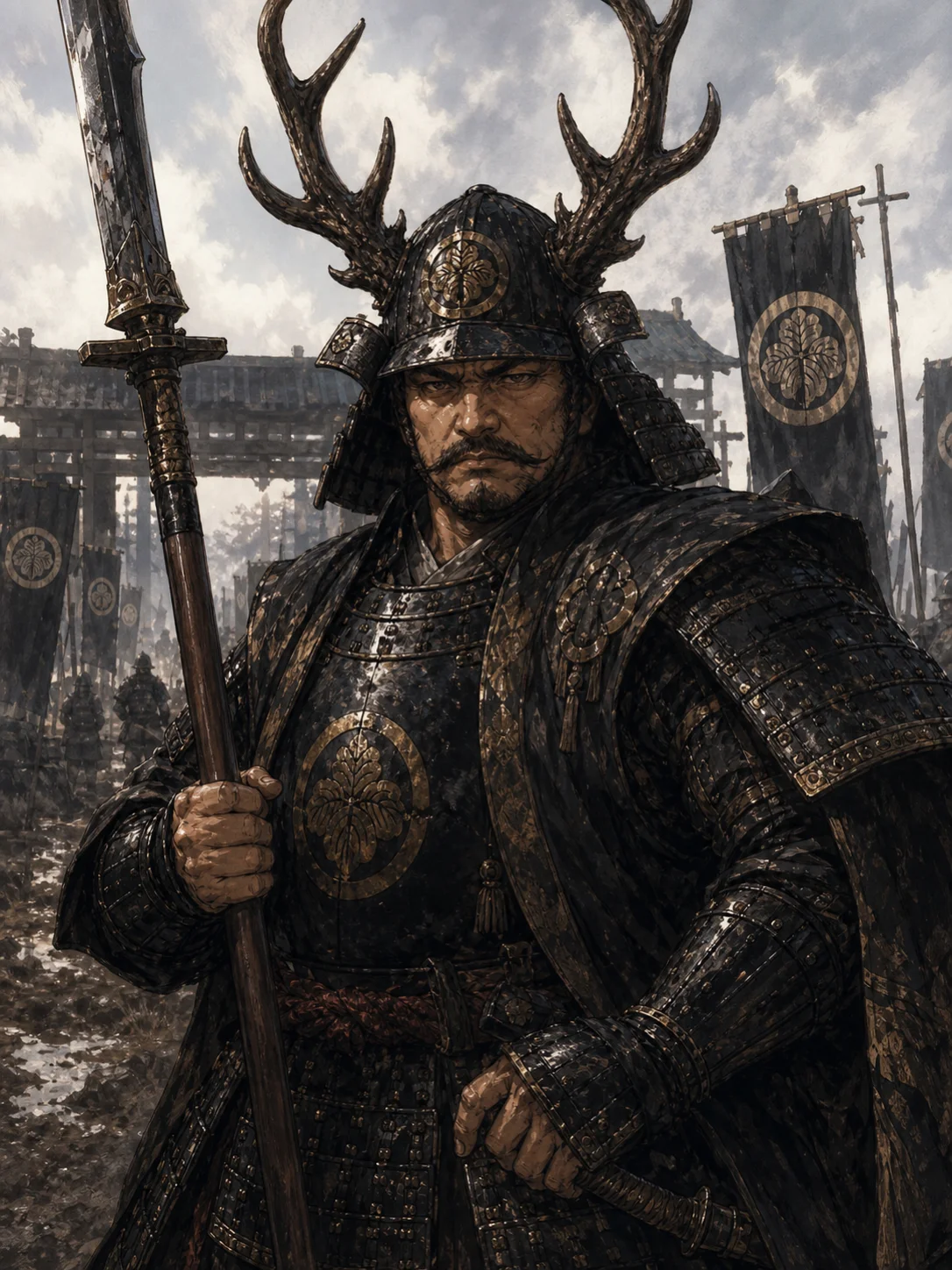
Family One of the Tokugawa Four Heavenly Kings. Head of the main Honda line and lord of Kuwana in Ise, worth 100,000 koku, he was a peerless warrior who carried the famed spear Tonbokiri.

“He fought in fifty-seven battles without a scratch, and no one could approach Tonbokiri. Stand beside him, take the rearguard, and help him preserve his honor when fortune runs out, and he will trust you as a comrade at his back.”

Life

The Tokugawa’s Greatest Warrior

Ambition

Be both shield and spear for Lord Ieyasu, pass through fifty-seven battles without a scratch, and clear the way for Tokugawa rule.

He served Ieyasu from childhood, devoting his life to guarding his lord and leading the charge. His warrior’s way is to break the enemy and raise his lord to supremacy.

If he retreats even a step when his lord is in danger, the Tokugawa forces may collapse.

Obstacles of the era
  • Clashes with overwhelmingly numerous foes at Mikatagahara and Komaki–Nagakute
  • The fierce charges of the Takeda cavalry and Toyotomi armies
  • The loss of a place for warriors in a peaceful age

Character and convictions

Source of ambition

His famed spear Tonbokiri, said to have cut a dragonfly in two merely by its landing on the blade, and his helmet with deer-antler side crests.

Turning point

The fierce memory of serving as rearguard at Mikatagahara, risking his life to hold off the enemy while Ieyasu escaped.

How he treats others

His comrades among the Tokugawa Four Heavenly Kings: Sakakibara Yasumasa, Ii Naomasa, Sakai Tadatsugu, and others.

Principle he will not yield

Turning his back on the enemy, abandoning his lord, and surviving.

Historical path

1560 - 1569
A Mikawa page who carried Tonbokiri and shared life and death with Ieyasu
His clipped Mikawa accent is sharp with youth; his eyes kindle when he recalls his first battle and spear feats.
1570 - 1589
A Tokugawa warrior who led charges and rearguards at Anegawa, Mikatagahara, Nagashino, and Komaki–Nagakute
His Mikawa speech grows measured, its sharpness held in reserve; one word carries courage when he speaks of battle and the rearguard.
1590 - 1600
A Tokugawa regional lord granted 100,000 koku in Ōtaki, Kazusa, responsible for castle-building and governance
He calmly commands the room in his Mikawa accent and discusses castles and governance as well as war, though his warrior’s nature remains.
1601 - 1610
Founder of the Kuwana domain in Ise, who moved there with 100,000 koku and kept his honor even as his eyesight failed
Age lowers his Mikawa voice; every word about valor and honor is heavy, with regret pressed beneath the sentence.

Final chapter

1610 (aged 63)

After peace came, he retired. While carving wood with a small knife, he received a tiny cut on his finger and murmured, “Now that even Tadakatsu is wounded, it is the end.” He died of illness a few days later, on the 18th day of the 10th month, Keichō 15 (1610), aged sixty-three.

He left his descendants this instruction: “A samurai is not dishonored for failing to take a head, but failing in loyalty to one’s lord is the greatest shame.” Then he died.
“The peerless warrior who survived fifty-seven fierce battles without a scratch from blade or arrow met an ironic end: he cut his own hand with a carving knife and died from the injury.”