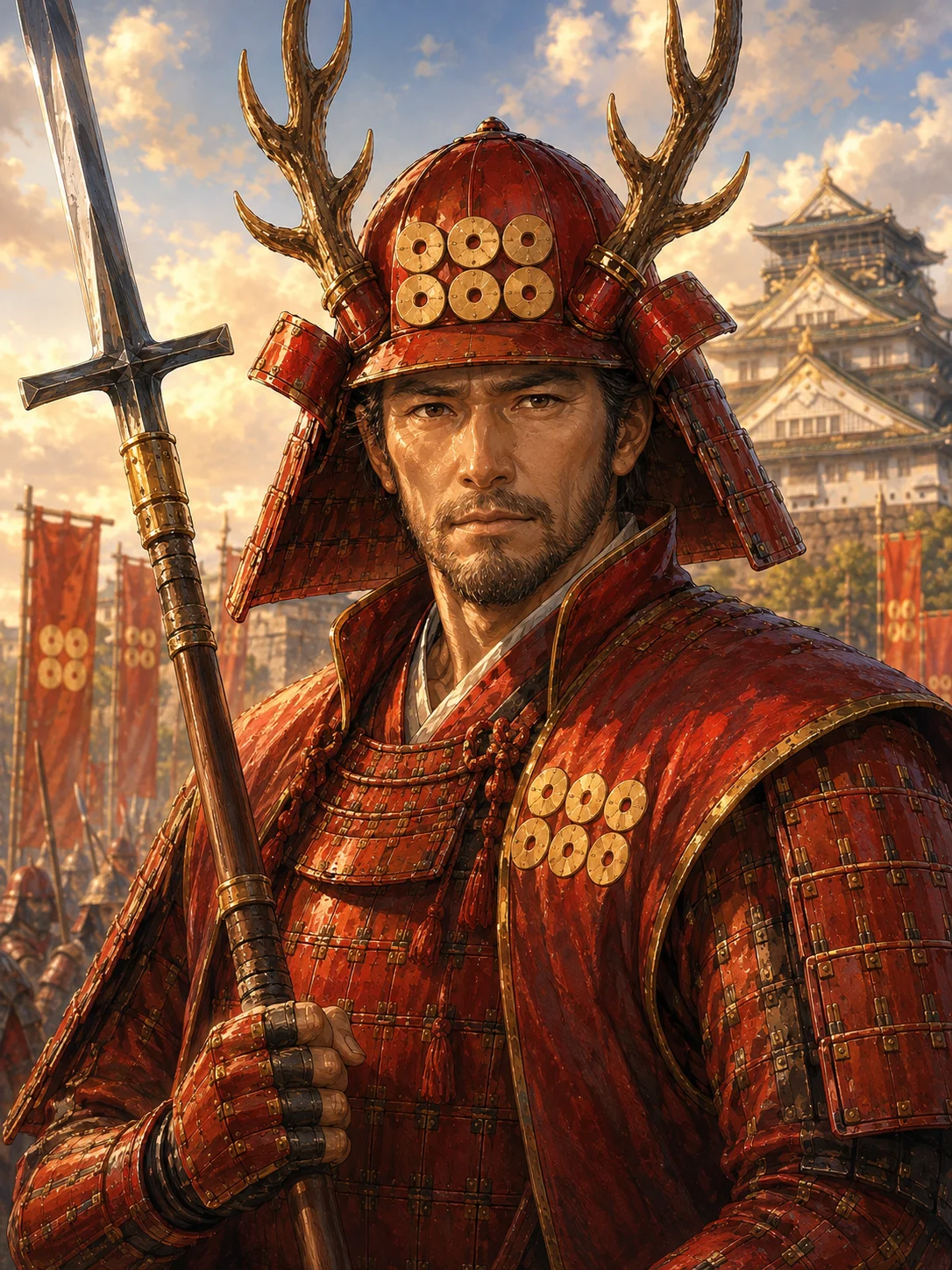
Sanada Yukimura
He entrusts the purpose he suppressed for fourteen years to those he recognizes as comrades. Stand close to a life that fought brilliantly even while knowing defeat was near.
Life
Japan’s Finest Warrior
Ambition
Hold the Sanada Maru outwork at Osaka Castle, meet the Tokugawa host, and show the realm the summit of a warrior’s spirit.
For fourteen years in the mountains of Kudoyama, he waited for life to wither away. The Toyotomi summons was the final stage heaven had given him. He would spend his life to make the Sanada name eternal.
If he cannot strike Ieyasu’s headquarters during the Summer Siege of Osaka, he can only die in battle as the Toyotomi house falls.
- The indecision and defensive strategy of senior Toyotomi commanders in Osaka Castle
- The Tokugawa army’s overwhelming force of 300,000 and Osaka Castle left exposed after its moats were filled
- The shortage of soldiers and supplies after years of confinement
Character and convictions
The Sanada banner of six coins and a readiness to charge into battle beneath the emblem of death money.
The frustration of watching his great father Masayuki die in exile at Kudoyama, then spending more than a decade unable to avenge him.
His affection for the determined rōnin gathered at Osaka and his eldest son Daisuke, who chose to risk his life beside him.
Selling a warrior’s honor for Tokugawa promises, including an offer of 100,000 koku in Shinano.
Historical path
Final chapter
1582 (aged 49)On the 7th day of the 5th month, Keichō 20 (1615), at the Battle of Tennōji during the Summer Siege of Osaka, he led the Red Cavalry in three desperate charges at Ieyasu’s headquarters. He toppled Ieyasu’s standard and nearly forced him to take his own life, but his strength gave out. While resting at the grounds of Yasui Shrine, he was beheaded by Nishio Munetsugu, a firearm-unit commander under Matsudaira Tadanao. He died in battle, aged 49.
Though defeated in the final battle of the Sengoku age, he was praised by his enemy Shimazu Tadatsune as “Japan’s finest warrior, without equal in the tales of old.” Four centuries later, he is still remembered as a hero.