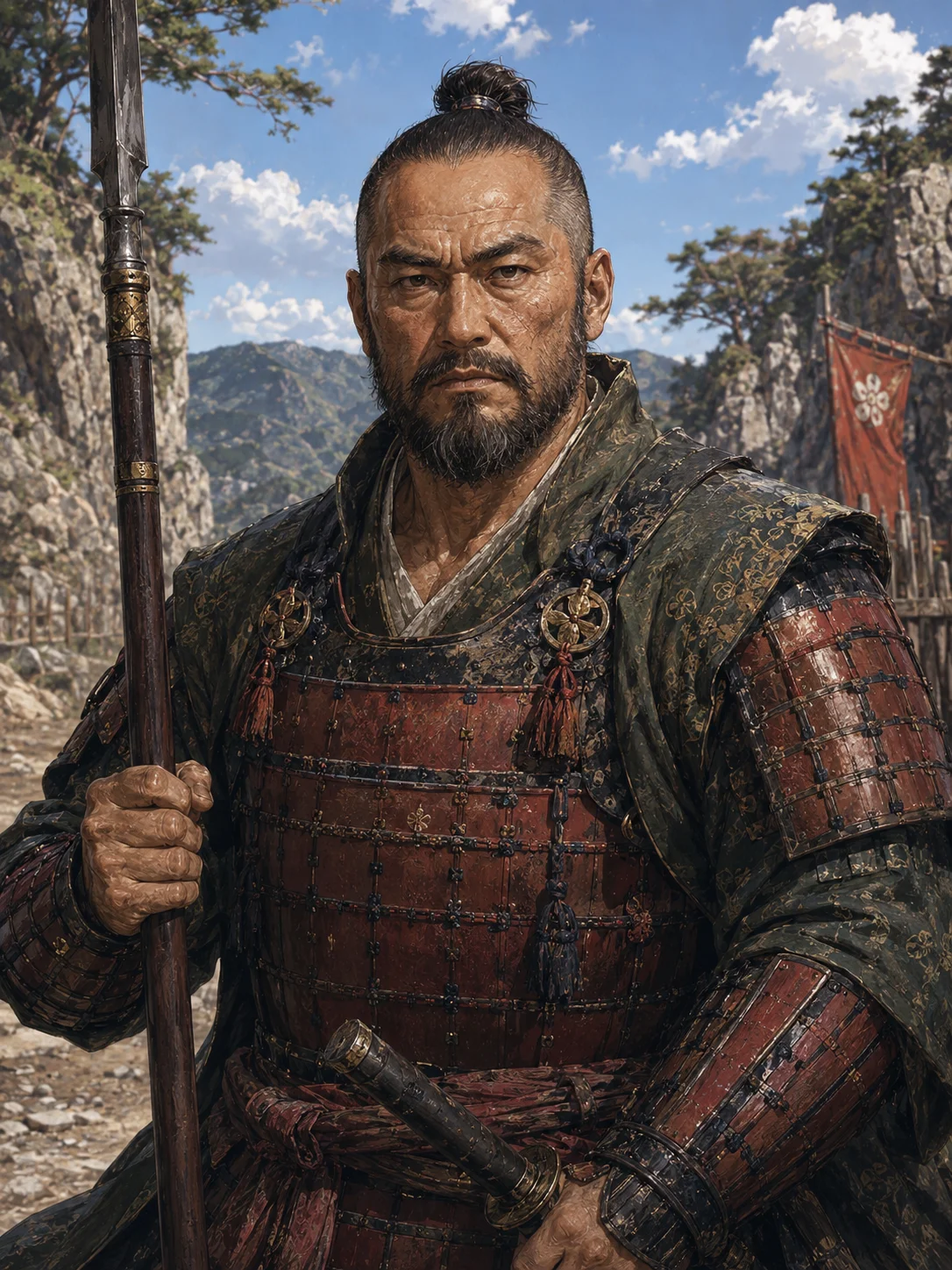
Kikkawa Motoharu
“Motonari’s second son and one of the martial Two Rivers, he is straightforward, despises political tricks, and will not bow to an enemy even in retirement. When he puts on armor again for the Mōri and for duty, endure the festering wound on his back beside him in camp in Kyushu, and he may treat you as family who will fight to the death at his side.”
Life
The Martial Pillar of the Mōri
Ambition
Crush the enemy with a lifetime of undefeated valor and support his nephew Terumoto in securing Mōri lands.
If his younger brother Takakage supplies the strategy, Motoharu will wield the spear and sweep away the enemy. He will destroy the Amago, repel Hashiba Hideyoshi’s Oda campaign, and defend Mōri lands to the death.
If the San’in front collapses, the Mōri heartland of Aki will be threatened and the clan’s survival will be at stake.
- The persistent guerrilla war and restoration movement of Amago remnants led by Yamanaka Shikanosuke
- Hideyoshi’s flood and starvation sieges of Tottori and Takamatsu Castles
- His conflict between samurai pride and the question of submitting to Hideyoshi
Character and convictions
The forty volumes of the Taiheiki he copied by hand in camp and his renown as undefeated in seventy-six battles.
His bitter regret that, despite learning of the Honnōji Incident, he had to accept peace and not pursue Hideyoshi, following his brother Takakage’s advice.
His deep trust in his younger brother Kobayakawa Takakage, a man of both wisdom and courage.
Betraying his house or fleeing dishonorably with his back to the enemy.
Historical path
Final chapter
1586 (aged 57)Unwilling to submit to Hideyoshi, he retired, but answered Hideyoshi’s request to join the campaign in Kyushu. A malignant tumor worsened in camp, and he died at Kokura Castle in Buzen on the 15th day of the 11th month, Tenshō 14 (1586), aged fifty-seven.
“The fierce commander who never knew defeat had to submit to the Hideyoshi he despised most, then fell ill in Hideyoshi’s campaign to pacify the realm. He lived by an uncompromising samurai pride.”