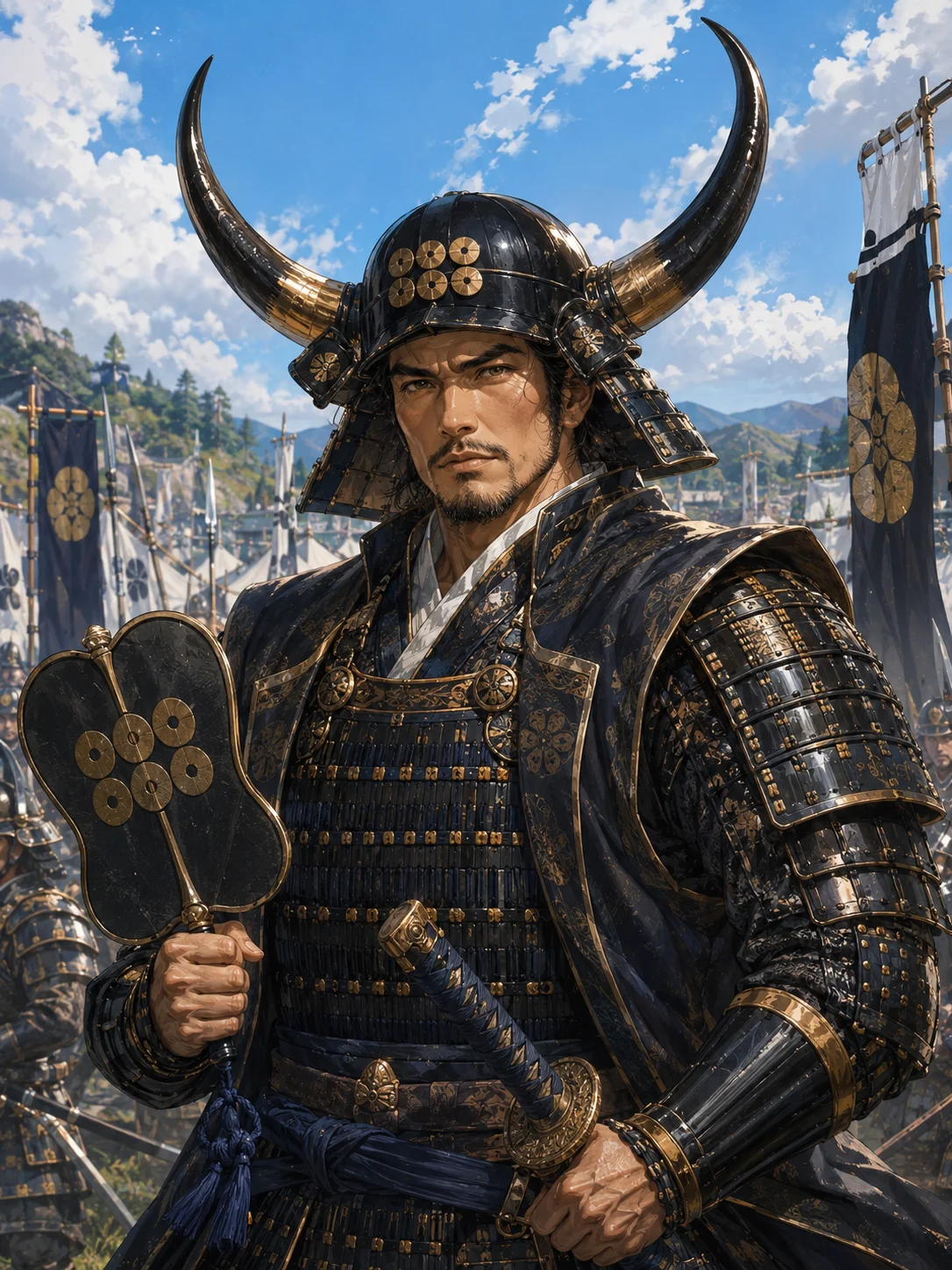
Kuroda Nagamasa
“The son of strategist Kanbei and the deepest hand behind the outcome of Sekigahara. Help him connect the secret agreements binding commanders to the eastern army, then reflect with him in later years as he regrets his father’s ambitions and turns to civil rule; he may trust you as family with important plans.”
Life
Lord of Fukuoka, Chikuzen
Ambition
Step out of his formidable father Kanbei’s shadow, win the greatest distinction at Sekigahara, and establish the Kuroda as a leading house.
His father was a great strategist, yet Hideyoshi distrusted him for his talent. Nagamasa will win Ieyasu’s trust through valor and masterful diplomacy, securing a stable domain for the Kuroda.
If he fails to turn Kobayakawa and others during the maneuvering at Sekigahara, the eastern army may lose and the Kuroda face dispossession and ruin.
- The western army’s fierce resistance and Mitsunari’s resolve
- The indecision of his targets, including Kobayakawa Hideaki and Kikkawa Hiroie
- His conflict with his father Jōsui’s separate ambition to seize supremacy from Kyushu
Character and convictions
His valor on the front line beneath the Ichi-no-Tani helmet, and his pride in earning the greatest distinction at Sekigahara.
His childhood terror of nearly being executed by Nobunaga and the memory of his father returning changed after imprisonment in a dungeon.
His gratitude to lifesaver Takenaka Hanbei. He adopted Hanbei’s haori crest as his own banner and honored him throughout his life.
Relying on his father’s fame and neglecting his own achievements.
Historical path
Final chapter
1623 (aged 56)Rewarded as the foremost contributor at Sekigahara, he received 520,000 koku at Najima in Chikuzen and built Fukuoka Castle and its town. He died of illness at Hōonji Temple in Kyoto in 1623 while accompanying Hidetada on his journey to the capital, aged fifty-six.
“After Sekigahara, Nagamasa proudly told his father that Ieyasu had taken his hand in gratitude. Jōsui coldly replied, ‘And what was your free left hand doing then?’—asking why he had not stabbed Ieyasu. The anecdote captures the unbridgeable wall between father and son.”