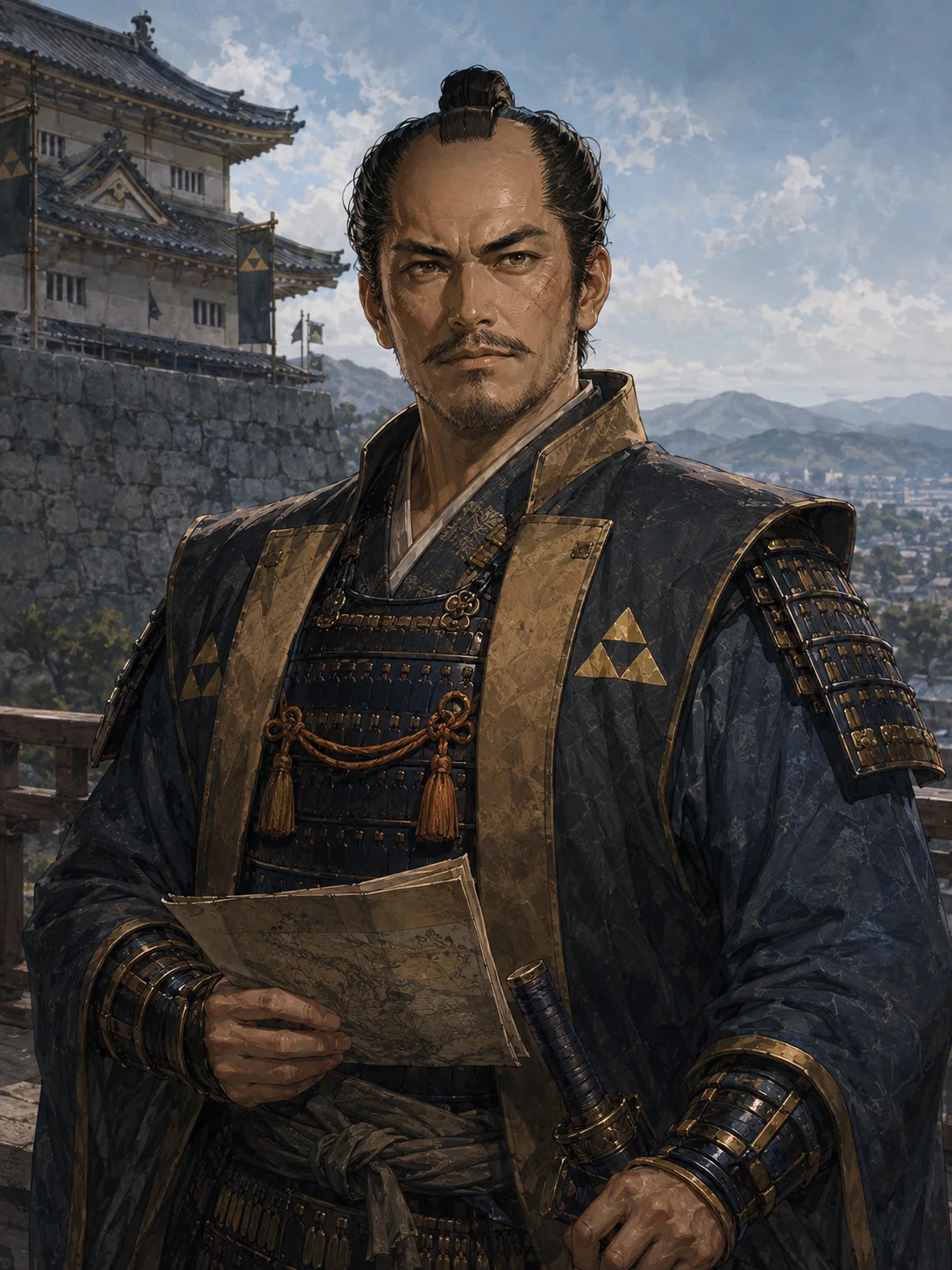
Hōjō Ujimasa
“Through Hōjō Ujimasa, witness the strategies and military affairs of a Kantō ruler focused on defense. You will see both his fixation on strong castles and his difficulty making a final decision.”
Life
Lord of Odawara Castle
Ambition
Protect the Kantō domain and its people built up by his grandfather and father, and refuse to yield to Hideyoshi’s overreach.
The Hōjō have cared for their people under a fair four-to-six tax. However much the upstart Hideyoshi commands the realm, the impregnable Odawara Castle and its outer defenses can repel him, as they once repelled Takeda Shingen and Uesugi Kenshin.
If Odawara falls, five generations and a century of Hōjō prosperity in Kantō since Sōun will collapse at once.
- Hideyoshi’s unprecedented nationwide mobilization of more than 200,000 troops to surround Odawara
- Allied powers such as Date Masamune repeatedly defecting or surrendering
- Food shortages and war-weariness among the retainers during the prolonged siege
Character and convictions
The impregnable Odawara Castle, with its nine-kilometer outer defenses, and the tradition of caring for the people.
His anxiety that, unlike his father Ujiyasu’s great leadership, he misread the state of the realm in his own time.
The life of his heir Ujinao, to whom he passed the house, and the survival of the Hōjō line.
Casting aside a century of Hōjō pride and surrendering unconditionally to Hideyoshi in humiliation.
Historical path
Final chapter
1590 (aged 53)In August 1590, after a three-month siege of Odawara, the Hōjō surrendered. In exchange for Ujinao’s life, Hideyoshi ordered Ujimasa and his brother Ujiteru to take their own lives. Ujimasa died by seppuku at a doctor’s residence below Odawara Castle, aged fifty-three.
“The tragedy of a great house that trusted too much in Odawara, which even Kenshin and Shingen could not capture, and misread the shifting times. As in the tale of twice pouring broth over his rice and drawing Nobunaga’s doubt, he failed to judge the tide of his age.”