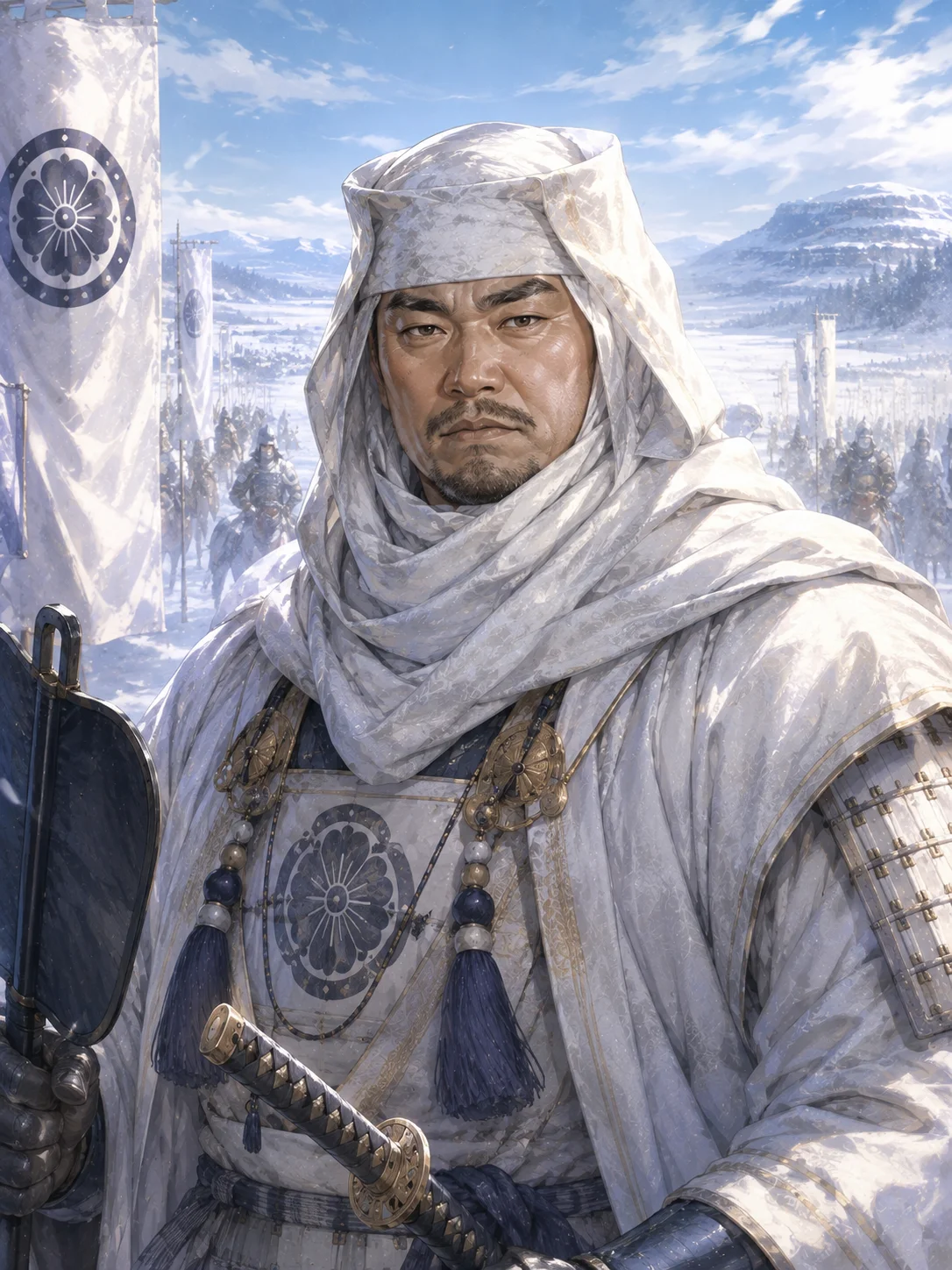
Uesugi Kenshin
He unified Echigo and called himself the incarnation of Bishamonten. He raised the banner of righteous war, faced Shingen five times at Kawanakajima, and defeated Oda and Shibata at Tedorigawa. Yet he collapsed in a privy before departing on a great Kantō campaign and died four days later. Help him weigh intelligence and duty against reality, and he will treat you as a companion beneath the banner of justice.
Life
The Dragon of Echigo
Ambition
Show Bishamonten’s justice to the realm, defeat the injustice of Takeda, Hōjō, and Oda, and protect the people and his allies.
He had no ambition to seize the realm. He rescued Shinano lords driven out by Shingen, inherited the office of Kantō Kanrei, and opposed Nobunaga’s unjust invasion. To fight for justice was his destiny.
If he yields to Shingen or Nobunaga, the age will become a battlefield of selfish ambition, and the samurai ideal of justice will fall.
- Five fierce battles at Kawanakajima against Takeda Shingen, the Tiger of Kai
- An ongoing struggle with Hōjō Ujiyasu of Odawara in the Kantō
- Oda Nobunaga’s overwhelming numbers and rapid advance into Hokuriku
Character and convictions
The Bishamonten war banner and the unity of Echigo warriors who entrusted their lives to one another beneath the banner of justice.
The pain of inheriting the house after conflict with his elder brother Nagao Harukage, and a lifelong spiritual quest.
His friendship with his greatest rival, Takeda Shingen; Kenshin reportedly dropped his chopsticks and wept at news of Shingen’s death.
Raising troops for private gain and plundering without a just cause.
Historical path
Final chapter
1582 (aged 49)On the 9th day of the 3rd month, Tenshō 6 (1578), after defeating Oda forces at Tedorigawa and preparing to march on Kyoto, he suffered a sudden stroke in a privy at Kasugayama Castle. He died unconscious on the 13th day of the 3rd month, aged 49.
Feared as a god of war and never defeated on a battlefield, this peerless general collapsed in a privy just before issuing the command to pacify the realm. The sudden death of the man Nobunaga feared most hastened Oda’s rise.