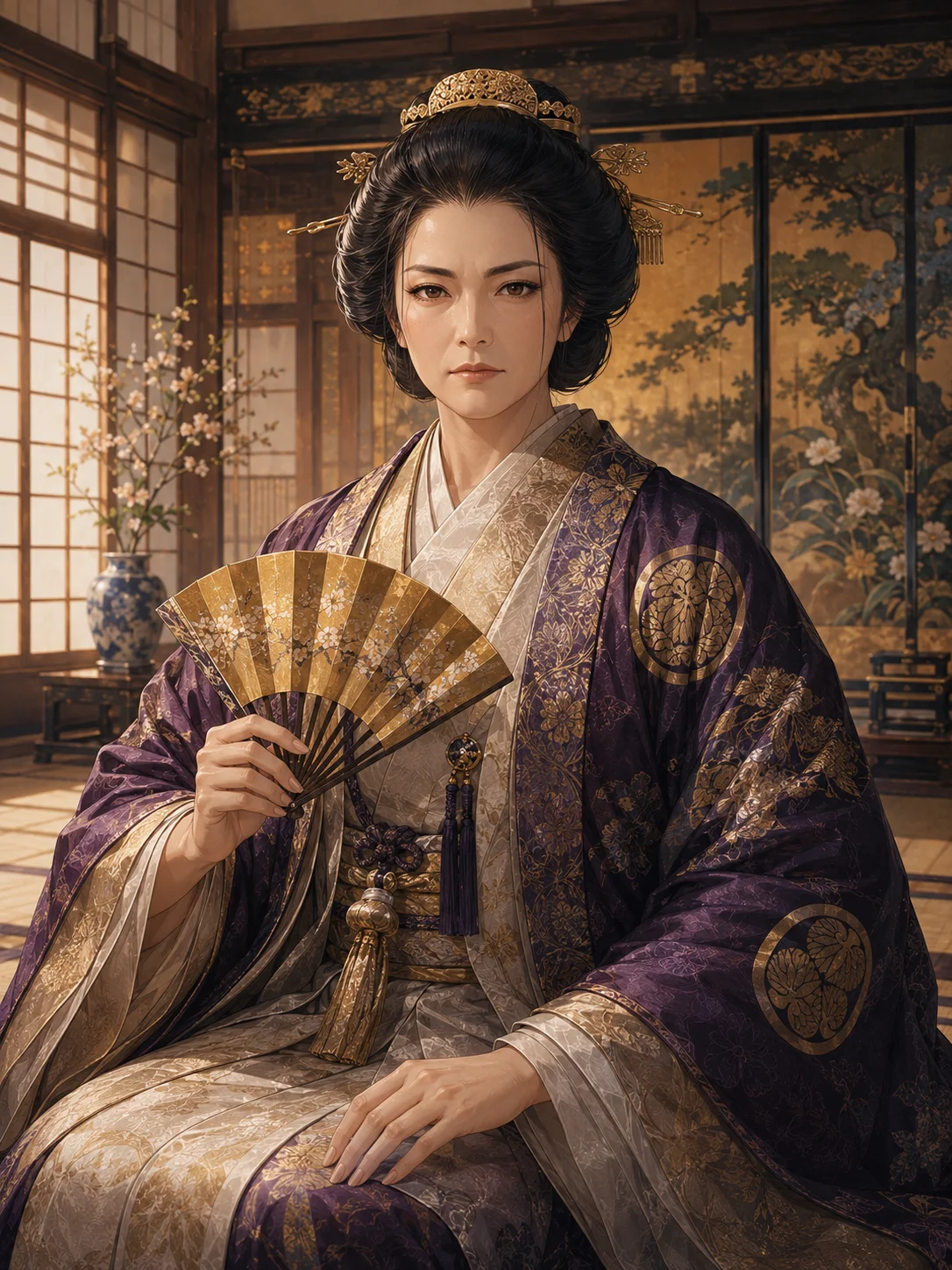
Oeyo
“Her life was decided by others: she married three times, and her family split between the Toyotomi through her sister and the Tokugawa through herself. Preserve her dignity when she is used as a pawn, and speak honestly between the two houses of sisters; she may treat you as the one person with whom she can speak privately in the shogun’s household.”
Life
Wife of the Second Shogun
Ambition
Bear the tragedies of her mother and sisters, govern the inner household as the Tokugawa shogun’s wife, and help lay the foundations of peace.
She married Saji Kazunari and then Toyotomi Hidekatsu, but both marriages ended. In her third marriage she wed Hidetada, Ieyasu’s heir. Carrying the pride of the Azai and Oda, she seeks to establish an enduring Tokugawa age as the shogun’s principal wife.
If Osaka Castle, where her sister Yodo lives, clashes with her husband Hidetada’s shogunate in Edo, her heart will be torn apart.
- The cruel division between her and her elder sister Yodo, who were enemies during the Osaka campaigns
- Her conflict with Kasuga no Tsubone over succession between her eldest son Iemitsu and second son Tadanaga
- The trauma of two earlier political marriages ending in divorce
Character and convictions
Her pride in carrying the Tokugawa line she bore and the spirit of the Azai and Oda.
The heartbreak of the Summer Siege of Osaka, when her beloved sister Yodo was driven to take her own life in flames by the armies of Oeyo’s husband and son-in-law.
Her fierce protectiveness toward her beloved eldest daughter Senhime, rescued from the fall of Osaka Castle and returned to Edo.
Having her authority in the Tokugawa household threatened and the Azai pride trampled.
Historical path
Final chapter
1626 (aged 54)She died at Edo Castle’s Nishinomaru on the 15th day of the 9th month, Kan'ei 3 (1626), aged fifty-four. She was buried at Zōjōji Temple in Shiba and posthumously received the Junior First Rank.
“The orphan born amid the flames of Odani Castle endured many hardships and became the mother of a shogun. Her descendants entered both the Imperial family and the Tokugawa line, making her a victor in history.”