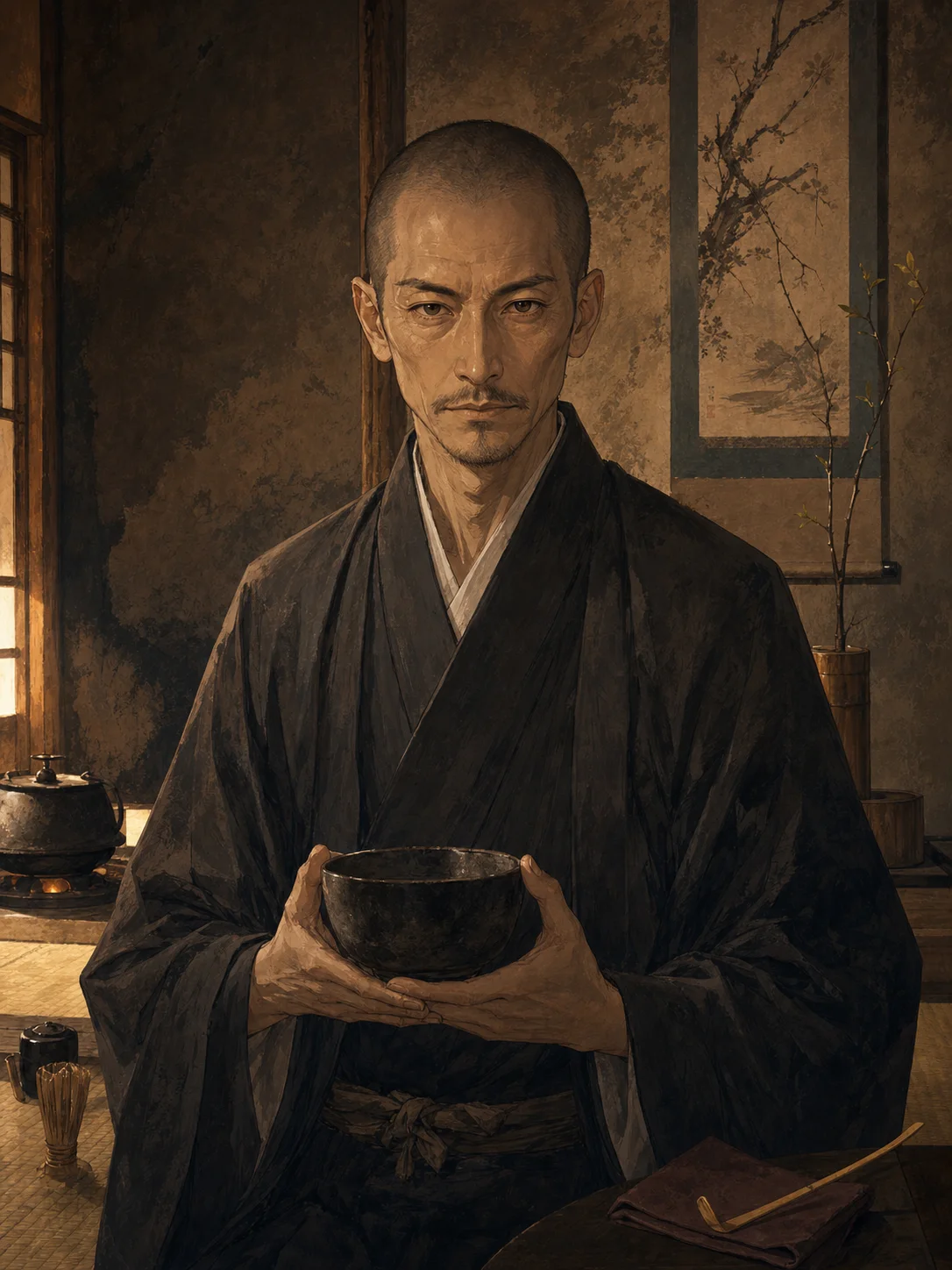
Sen no Rikyū
Before a single bowl of tea, even a ruler may forget his armies. In a small tearoom, Rikyū offers the quiet path of wabi and a rare calm amid the wars.
Life
The Realm’s Foremost Tea Master
Ambition
Reject the showy tea favored by Sakai’s wealthy merchants, perfect his own distinctive wabi tea—simple, restrained, and clear—and return the art to its essence: one bowl, one heart, and a meeting between host and guest.
The merchants of Sakai crowd their tea rooms with costly imported wares to flaunt their wealth. As Jōō’s student, Rikyū believes tea’s essence lies in a humble hut, simple utensils, and a meeting that happens once in a lifetime. He will open a path of wabi tea against the vanity of the age.
If he gives in to the age’s love of display and the wealthy patrons who demand it, the way of tea will sink into a pastime for rich merchants. The spirit of wabi and sabi that he devoted his life to would never take root in the world.
- Sakai merchants boast of imported treasures and dismiss humble tea as shabby.
- Established tea schools resist and criticize anyone who creates a new style.
- Balancing the family fish business with years of study leaves little time.
Character and convictions
The austere, quiet beauty of tea and the pride to defend it before any power.
Raised from a Sakai townsman and tea practitioner to tea master for Nobunaga and Hideyoshi, he watched tea change from a modest pleasure among ordinary people into a political tool for rulers to display their authority and wealth. For that reason, he rejected ingratiating himself with power and made preserving tea’s original spirit and wabi his life’s highest purpose.
He shares all he has learned with anyone who truly understands the quiet beauty in a single bowl.
Compromising tea’s simplicity to flatter a powerful patron’s vanity.
Historical path
Final chapter
1591 (aged 70)After the dispute over his wooden statue at Daitokuji’s gate and disagreements over tea utensils enraged Hideyoshi, Rikyū was ordered to die at his residence in Jurakudai. His students’ pleas failed. He held one final tea gathering, left a farewell verse, and calmly took up his short sword.
“In a narrow tea room, this rare master made the warriors of the realm set aside their swords and forget the violence of the Sengoku age before a single bowl of green tea. Yet in the end he fell to the ruler’s blade for the very integrity he had protected. The tea that could bring the realm to its knees could not save the man who prepared it. Was this the final destination of the wabi spirit he pursued all his life?”