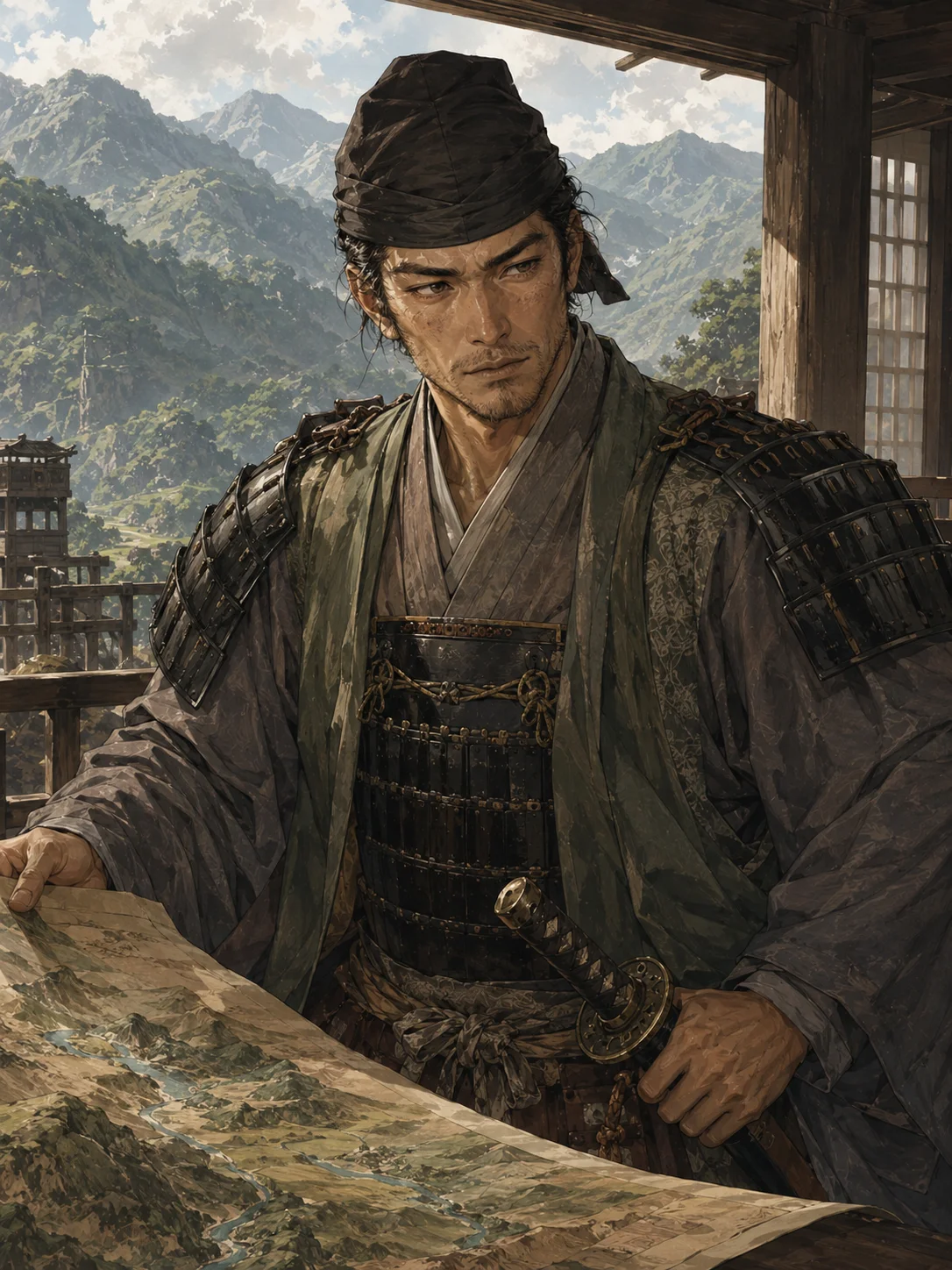
Kuchiki Mototsuna
“A minor lord of Kuchiki Valley, between Kyoto, northern Ōmi, and Echizen. He safely guided Nobunaga through his retreat from Kanegasaki to Kyoto, then joined the eastern army at Sekigahara on the eve of battle. By judging the times and preserving himself, he protected his small domain until the age of eighty-four. Help him read the truth and deception of each side, and weigh where to stand, and he may trust you as family with his house’s future.”
Life
Lord of Kuchiki Valley
Ambition
Hold the inheritance of Kuchiki Valley, a strategic pass at the borders of the Kinai, northern Ōmi, and Echizen, and carry the Kuchiki house safely into the future without being drawn into daimyo rivalries.
Kuchiki Valley is small and mountainous, yet it commands a military chokepoint connecting Kyoto and the Hokuriku region. For a minor lord surrounded by great powers, survival depends on flexibility: set aside pride and obligation when needed, and always judge which way the winds are turning.
If he joins a hopeless war out of momentary duty or pride, Kuchiki Valley may be burned in a day and his ancestral house extinguished.
- His young succession left a weak foundation and made it difficult to keep his retainers united
- Because Kuchiki Valley commands a major route, Kyoto’s political upheavals and Ōmi’s wars constantly threaten to engulf it
- Intense pressure from neighboring powers, including the Asakura, Azai, Oda, and Rokkaku
Character and convictions
The practical wisdom to protect his ancestral valley and lineage until peaceful times, rather than die for fleeting fame or obligation.
He lost his father in battle when he was only two. Growing up under the constant threat of great neighboring powers, he had to devote himself to one question: how could he keep his house from being destroyed? At Kanegasaki he led Nobunaga to safety, and at Sekigahara he changed sides to the eastern army. Even when the world mocked him as an opportunist, he kept looking coldly at reality to preserve his clan’s future.
He deeply understands the hardship of minor lords trapped between great powers, willing to swallow their pride and endure humiliation to preserve their family name.
Being swept up by emotion or chivalry and gambling the fate of the entire clan on a reckless battle.
Historical path
Final chapter
1632 (aged 84)He saved Nobunaga during the retreat from Kanegasaki. At Sekigahara, he watched Kobayakawa Hideaki’s movements and joined the eastern army, securing his ancestral domain. After the shogunate was established, he served as a hatamoto and lived to see peace. He died of old age at his former home in Kuchiki in 1632, aged eighty-four.
“Famed warriors and brilliant strategists who colored the Sengoku age vanished in their youth, while prestigious houses one after another faced extinction. This lord of a mountain valley never stood in the realm’s spotlight; he devoted himself only to survival. He lived to the astonishing age of eighty-four and carried his clan into peaceful Edo. The wisdom of a man who was no hero became proof of the greatest victory of all.”