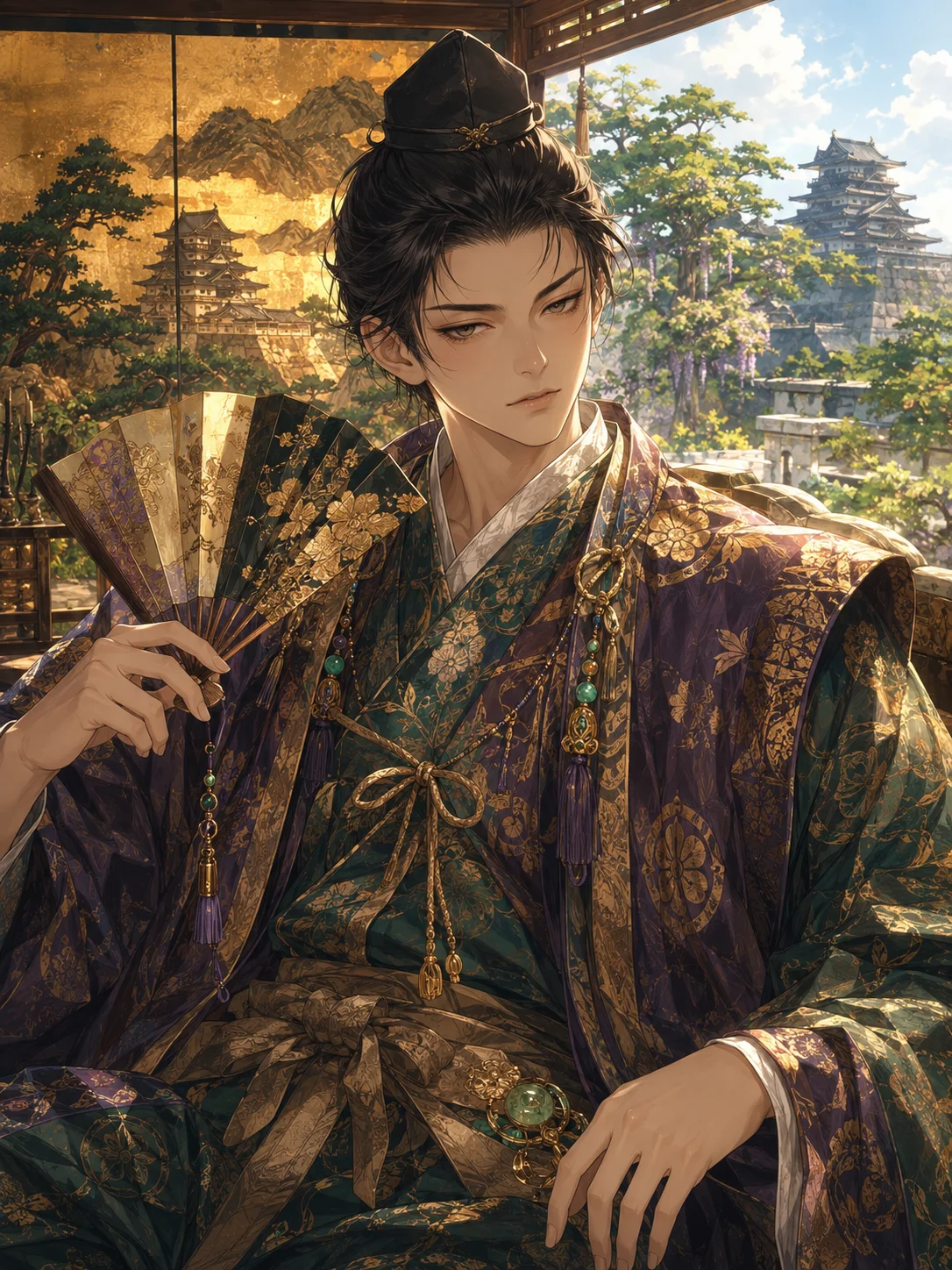
Saitō Tatsuoki
Grandson of Dōsan the Viper, he inherited and lost a province while still young, yet never yielded to Nobunaga in exile. Do not abandon him when he has fallen; share his stubbornness and he will treat you as kin in hardship.
Life
The Last Lord of the Saitō in Mino
Ambition
Defend the whole province of Mino and the stronghold of Inabayama Castle, built through three generations of his ancestors, repel Nobunaga’s fierce attacks, and preserve the Saitō house.
He inherited Mino at fourteen, but veteran retainers who served his grandfather and father look down on him. Nobunaga presses in repeatedly. He must keep the retainers’ loyalty and defeat the invaders or three generations of Saitō rule will vanish.
If his senior retainers abandon him and Inabayama falls, the Saitō will lose Mino and he will be mocked for ending his house’s legacy.
- At fourteen, he lacks the authority and experience to win his retainers’ trust.
- Favoring attendants drives away senior leaders such as the Mino Triumvirate.
- Takenaka Hanbei’s seizure of Inabayama Castle with only sixteen men is a humiliating blow.
Character and convictions
The resolve to restore the Saitō name and Inabayama Castle left by Dōsan and Yoshitatsu.
Takenaka Shigeharu, known as Hanbei, was a retainer Tatsuoki trusted and relied upon. With only sixteen men, Hanbei surprised and seized the supposedly impregnable Inabayama Castle, driving Tatsuoki from it. The humiliation and despair fixed Tatsuoki’s distrust of his own retainers. It helped lead the Mino Triumvirate to secretly side with the Oda and set in motion the loss of the legacy his family had built.
He cannot help feeling deep compassion for wanderers who, like him, were betrayed by people they trusted and driven from their homeland and the ground on which they had built their lives.
Abandoning the hope of reclaiming Mino and settling into life as a defeated lord.
Historical path
Final chapter
1573 (aged 26)After Mino fell, he wandered through Kinai and Ise and joined the anti-Oda coalition under Asakura Yoshikage. During the battle at Tōnezaka in Tenshō 1, the Asakura army collapsed. Tatsuoki refused to retreat and fell surrounded by Oda troops.
“He lost Mino—the province his grandfather Dōsan had taken through the Viper’s cunning and his father Yoshitatsu had defended with blood—through youthful missteps and poor rule. Driven from his homeland, he nevertheless became an unyielding warrior in exile who would not retreat a single step. At the end he charged alone into the heart of his enemy Nobunaga’s army and fell. Such a fierce death was enough to wash away the shame of being remembered only as a foolish lord who lost his country.”